Liquid nitrogen and rapid food freezing
Liquid nitrogen boils near −196 °C at atmospheric pressure. Its very low temperature enables rapid cooling in controlled food-processing settings.
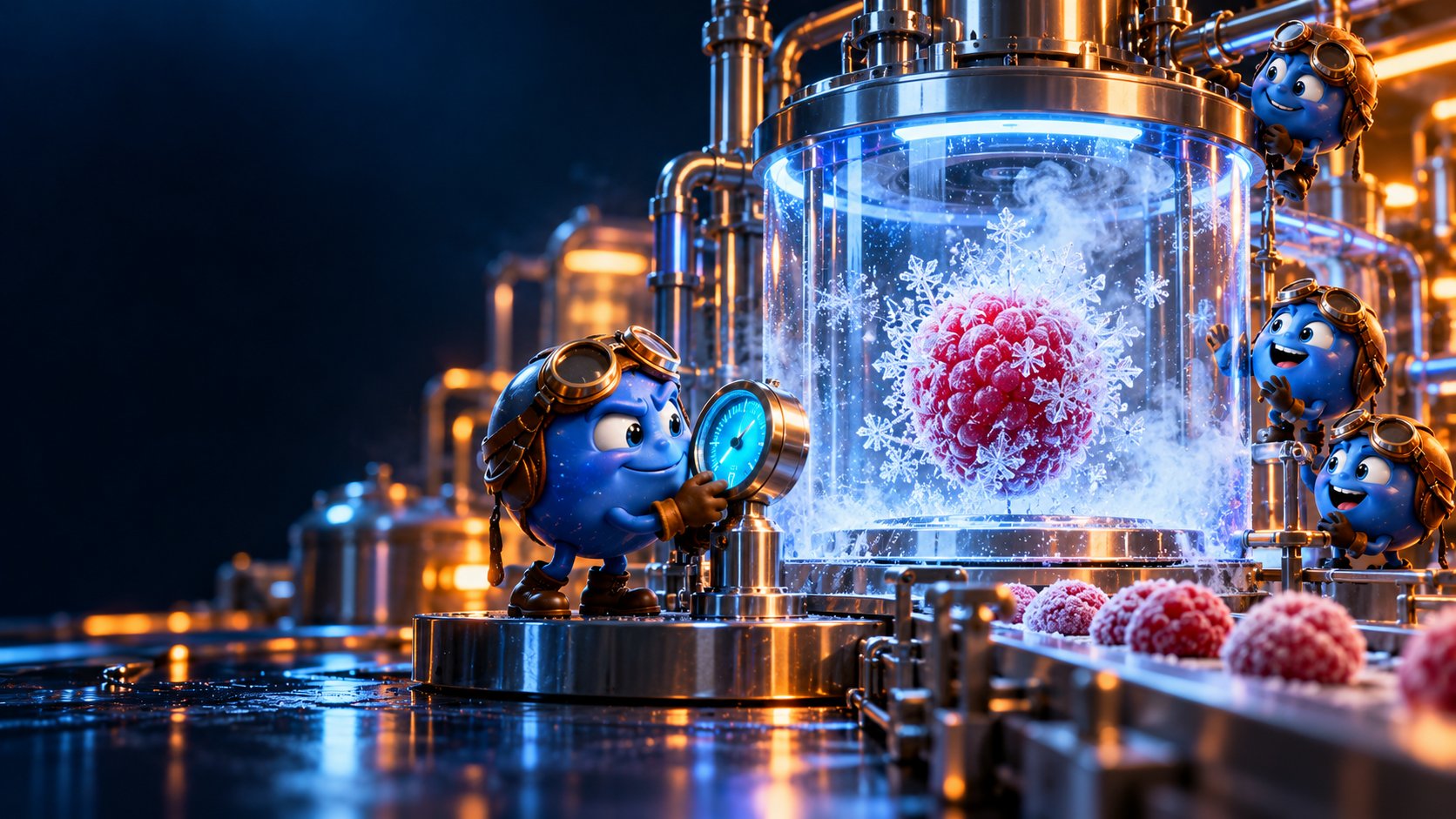
Why rapid freezing helps
Rapid heat transfer can form smaller ice crystals than slower freezing under comparable conditions, potentially helping some textures. Outcomes depend on food, process, geometry, and later storage.
Cold is not the whole story
Freezing slows microbial growth but does not sterilize food. FDA warns that liquid nitrogen can cause severe injury if directly consumed or allowed to contact skin. Food processing with it belongs to trained professionals. Never add it to food at home or consume it; this page is not a preparation guide.
Sources and further reading
These references are starting points. Check the source directly for definitions, dates, units, and context. This is an educational overview, not an operating manual or professional advice.
Have a big idea for n2.si?
We expect a substantial offer; low bids will not be considered or answered. Answer two quick questions on the home page to open the English offer form.
The offer should be cool-headed; liquid nitrogen has already claimed the coldest part of the conversation.